
Calm the inner storm
Sometimes an unseen trigger can bring us to a place where we feel simmering panic under our skin or boiling up inside our chest. Recognising and managing these triggers is crucial on the path to recovery. To navigate these challenging moments, it's essential to develop practical coping tools and strategies.
Here are some of our favourite techniques:
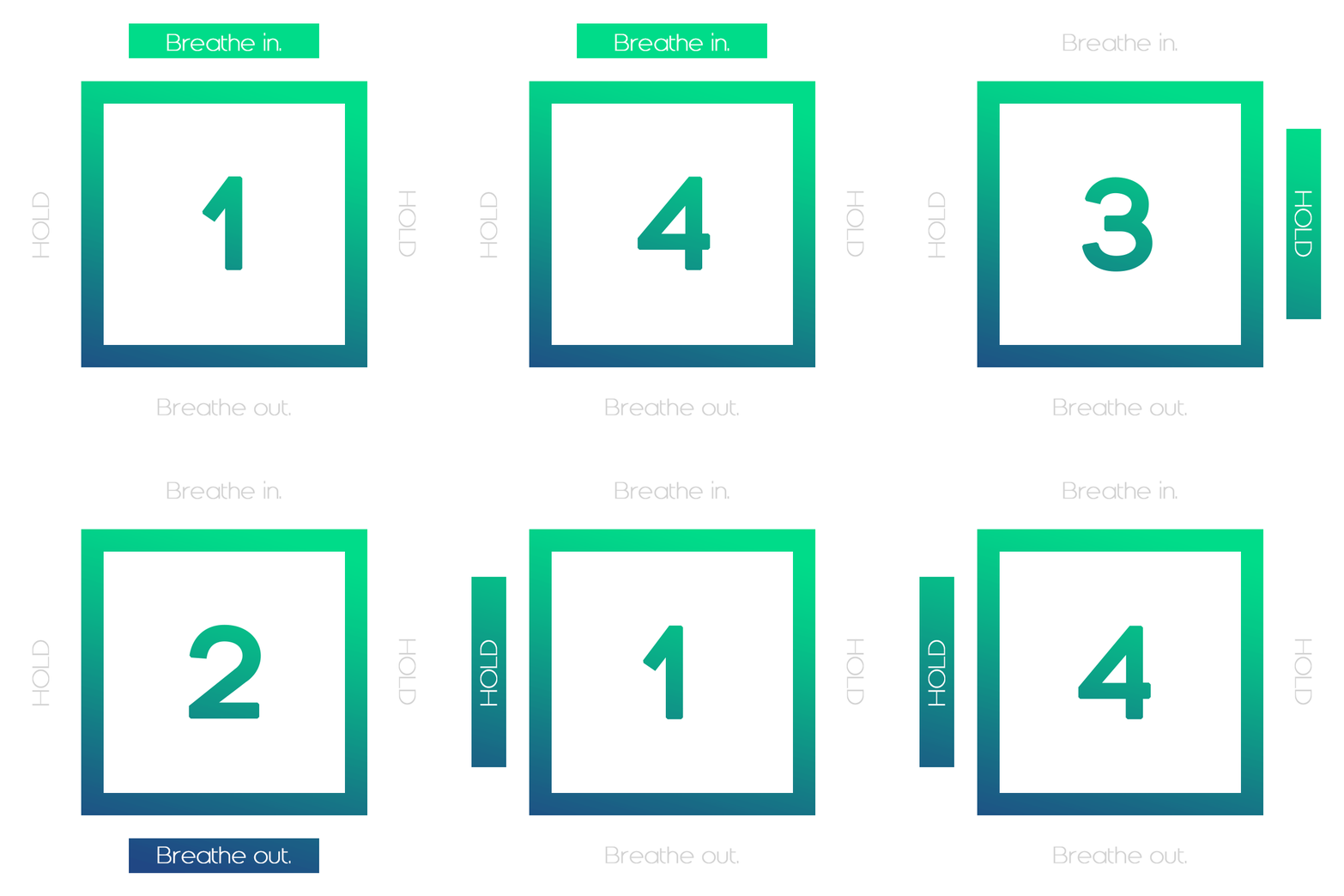
Box breathing technique
When we are anxious we tend to take quick, shallow breaths. This sends messages to our brain, causing a feedback loop that reinforces our fight-or-flight responses.
Deep, calming breaths allow oxygen to disrupt that loop and bring back calm.
- Breathe in through your nose, counting to four.
Feel the air fill up your lungs. - Hold your breath for 4 seconds.
- Slowly exhale through your mouth for 4 seconds.
- Hold for 4 seconds before breathing in through your nose again.
Mental body scan
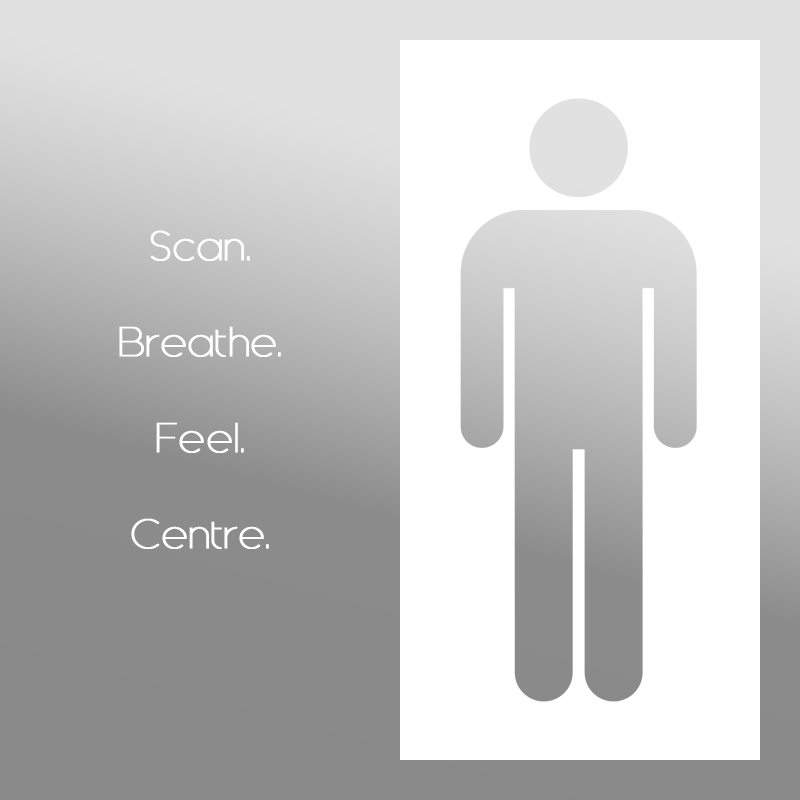
A body scan is a mindfulness technique that lowers stress and brings your awareness back in to focus.
- Get comfortable (preferably lying down if you can but sitting works fine too).
- Close your eyes and take a few deep breaths until you feel your breathing slow down.
- Bring your awareness to your feet. Acknowledge any sensations, like pain, for instance. Allow yourself to feel any emotions you need to feel.
- Now bring your awareness to your ankles and begin a process of mentally scanning your way up through your entire body.
- Focus on each element of your body: Your knees, your thighs, your stomach, your elbows, and upward.
Challenge your thoughts
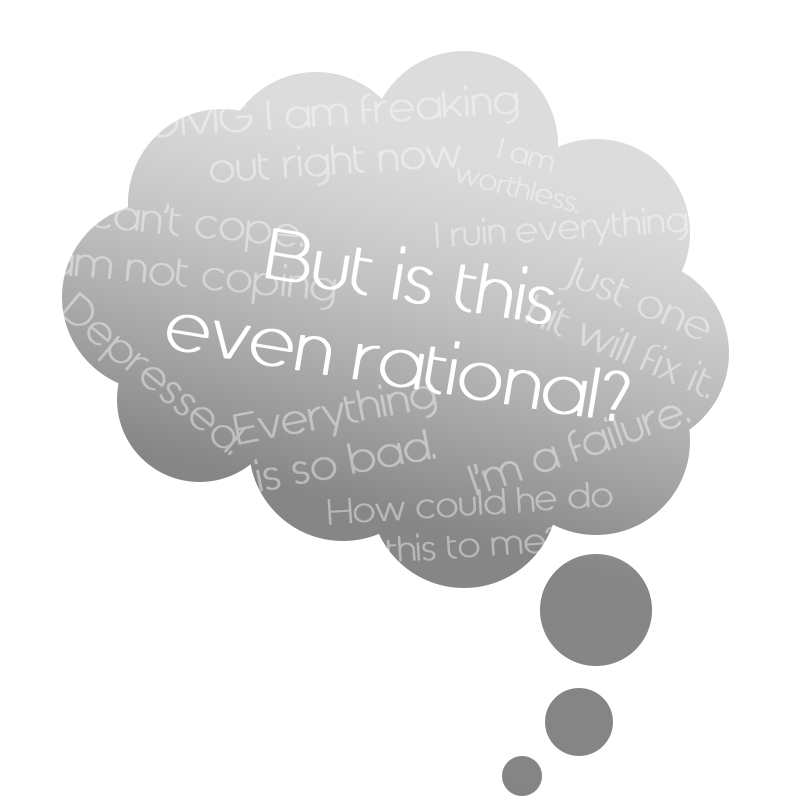
Anxiety often gives us irrational thoughts that don't always make sense. It can feel natural for our mind to default to the worst-case scenario and distort things to a What If cycle. This can cause us to self-sabotage things in our lives.
When you experience this type of thought pattern, stop and ask yourself:
When you experience this type of thought pattern, stop and ask yourself:
- Is this a rational thought?
- Is the worst-case likely to even happen?
- Has it ever happened to me before?
- What actually is the worst that can happen and can I handle that?
A 'Release' exercise
This exercise is part mindfulness and part physical activity. Sometimes, when the storm is brewing beneath the surface, we need to do engage in an activity that might help to divert our attention and release some of that anxiety or panic.
- Put on your shoes and go for a walk outside OR engage in some other kind of physical activity that you enjoy, like gardening or lifting weights. You are going to burn off some energy with exercise.
- While you are doing this, visualise your anxiety like debris on a cliff, falling away and splashing into the ocean below. Visualise your anxiety eroding while your peace is manifesting.
- Now say this to yourself, as many times as you need, "I am going to be OK. I have got this. I'm good."

Spotify playlist
This is one of Coach Jaimi's favourite tactics to calm the inner storm.
Music can be a powerful ally in managing panic and anxiety. Its therapeutic effects are well-documented, as it has the ability to soothe the mind and ease emotional distress. Listening to calming melodies or your favourite tunes can divert your focus away from anxious thoughts and bring you back into a state of calm and feeling present within yourself.
Music also has the capacity to regular breathing and heart rate, aligning them with a steady rhythm and providing an anchor in moments of distress. Whether it's the comforting lyrics of a song or the instrumental harmony, music serves as a readily accessible tool to help you find solace and manage anxiety.
Here is a great Spotify playlist if you're feeling lost for something calming to listen to:
Write it down, put it out there
Expressing your thoughts and feelings through writing can be an effective tactic for calming the inner storm. When you put your thoughts on paper, you externalise them, making them less overwhelming. This process helps you gain clarity, identify triggers, and confront irrational fears. It also allows you to release pent-up emotions, reducing their grip on your mind.
- To start, find a quiet space.
- Grab a journal or open a digital document, and begin writing freely.
- Don't worry about grammar or structure - just let your thoughts flow.
- Try to pinpoint the source of your anxiety or panic and explore how it manifests in your thoughts and body.
As you release these thoughts into the written word, you may find relief and a greater sense of control over the way you're feeling. Give it a try.

Re-centering object
This is one of Coach Steve's favourite tactics to calm the inner storm.
When we are anxious or angry, so much of our energy is spent on irrational thoughts. It is during these times that we at a higher risk of making decisions that we might later regret.
When we are calm, we can find a centering object.
A centering object can be something small and simple, perhaps a small stuffed animal, a polished rock you keep in your pocket, or some jewellery worn on your wrist or a necklace. It really helps if the object is something that you hold dear, something that is meaningful to you.
A centering object can be something small and simple, perhaps a small stuffed animal, a polished rock you keep in your pocket, or some jewellery worn on your wrist or a necklace. It really helps if the object is something that you hold dear, something that is meaningful to you.
Give yourself permission.
When those negative emotions hit, you're going to hold or touch this object and re-center your thoughts and emotions.
When those negative emotions hit, you're going to hold or touch this object and re-center your thoughts and emotions.
This simple act can help calm your thoughts and distract your attention away from the negative and give you space to focus on the positive. It can help to re-calibrate your mindfulness and allow your inner compass to find its true north again.

Other support services
Reach out to these online and in-person support services designed to help you. Whether it's someone to talk to or you need some advice, you will find support.